Did I Wait Too Long?
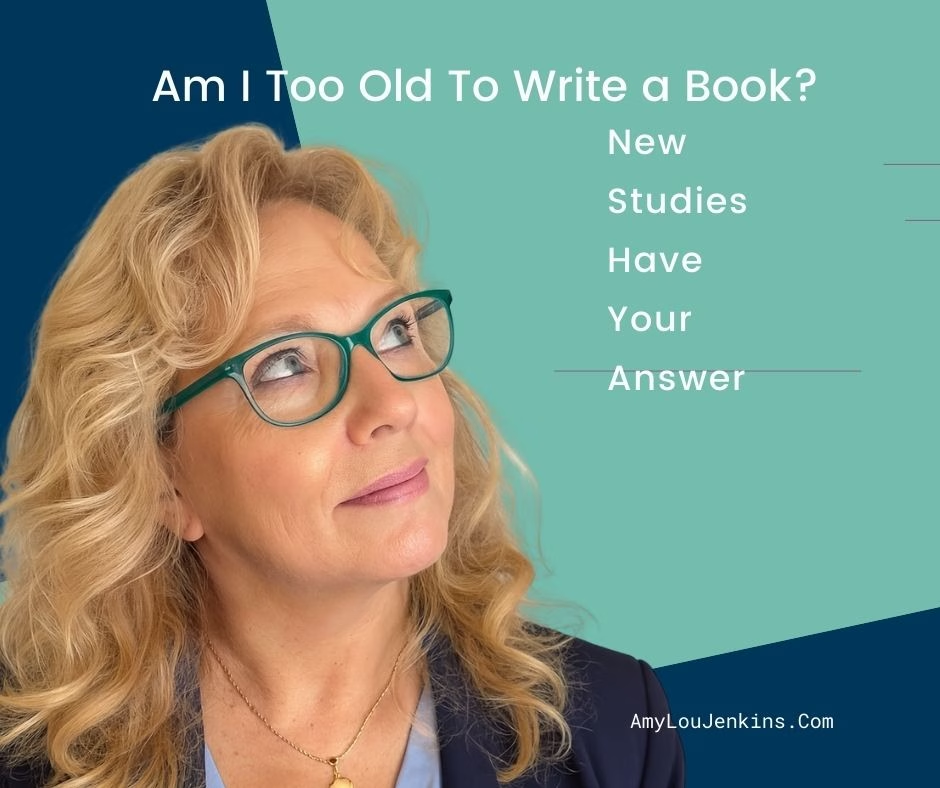
Am I too old to get started writing my memoir?
No.
I’m excited about this question because the science behind it is far more definitive than most people expect. Many people reach midlife and beyond with a brain that is better suited for writing than it was earlier in life because their thinking is more capable of synthesis and of creating meaning from lived experience.
When we look closely at cognitive research on brain development, a clear pattern emerges. The short version is this: the mental capacities on which writing depends do not decline with normal aging.
Writing depends on synthesis. It requires the ability to see patterns across decades, to hold contradiction without rushing to resolution, to understand consequence, and to recognize what mattered and why.
Those capacities strengthen with age.
When people ask if they’re too old to write a book, what I hear is the discomfort of beginning in a field where they don’t yet feel fluent, especially after spending much of their life developing competence and expertise elsewhere. Writing can start to look like a younger person’s game simply because it’s unfamiliar, not because it’s inaccessible.
The brain you have now is not past its creative window. It is precisely situated to transform complex life experiences into coherent, artful stories.
That’s not sentiment.
That’s neuroscience.
What the Mature Brain Brings to Writing
Cognitive researchers make an important distinction when they study how thinking changes over time. Some abilities are associated with speed. Others are associated with meaning.
The abilities writing relies on belong firmly in the second category.
What you gain over decades is something researchers call crystallized intelligence. This is not static knowledge or memorized information. It is the accumulation of judgment, language, discernment, and pattern recognition that develops through lived experience. It is an asset younger writers often do not yet have.
Writing draws directly on this kind of intelligence.
To write well, especially in narrative nonfiction and memoir, you must be able to recognize patterns across long spans of time, understand cause and consequence, tolerate ambiguity, and select what matters from a surplus of experience.
Those are not beginner capacities.
They are the capacities of someone who has lived long enough to see how things connect.
If you’ve spent decades paying attention, adapting, and learning how life actually works, you already have the raw materials narrative writing depends on.

Why Story Becomes Central as Experience Accumulates
I see this repeatedly in the writers who come to me. They arrive with an accumulation of experience they didn’t previously recognize as story. What’s changed isn’t imagination. It’s perspective.
As experience accumulates, isolated moments matter less than what those moments amounted to. Questions of “what happened” give way to questions of “what did it mean?” Story is how the mind conveys the wisdom of lived experience.
Research in narrative psychology and autobiographical memory shows that as people age, the brain relies more heavily on narrative to organize experience and extract meaning over time. Events are understood in relation to what came before and what followed after.
That shift matters for writing.
Narrative writing asks you to select, shape, and order experience so it becomes intelligible across time. It requires judgment about what belongs, what can be left out, and how one moment illuminates another.
This helps explain something we see repeatedly when we stop treating later-life writers as exceptions and start paying attention to patterns.
People not only continue writing as they age, but also continue to write.
Many begin. You can too. Check out WriterClubhouse.comhttps://www.writerclubhouse.com/
Evidence of the Pattern
When we look at publishing history, the pattern becomes even clearer.
Harry Bernstein published his first memoir at 93 and continued writing into his late nineties.
Lorna Page debuted her first novel at 93.
Margaret Ford published a novel based on her wartime letters at 93.
Herman Wouk published a novel at 97.
Ida Pollock continued publishing novels well past 100.
These writers are not anomalies. They are visible examples of what cognitive research reveals. When experience accumulates and narrative intelligence strengthens, writing remains not only possible but powerful.
What This Means for You
The question isn’t whether you’re too old to write a book.
The question is whether you’re ready to use the kind of intelligence that narrative writing depends on.
If you want to work with this material in real time, Studio Sessions offer a focused way to write without enrolling in a long course or committing to a program.
Not sure you’re ready for a Studio Session yet?
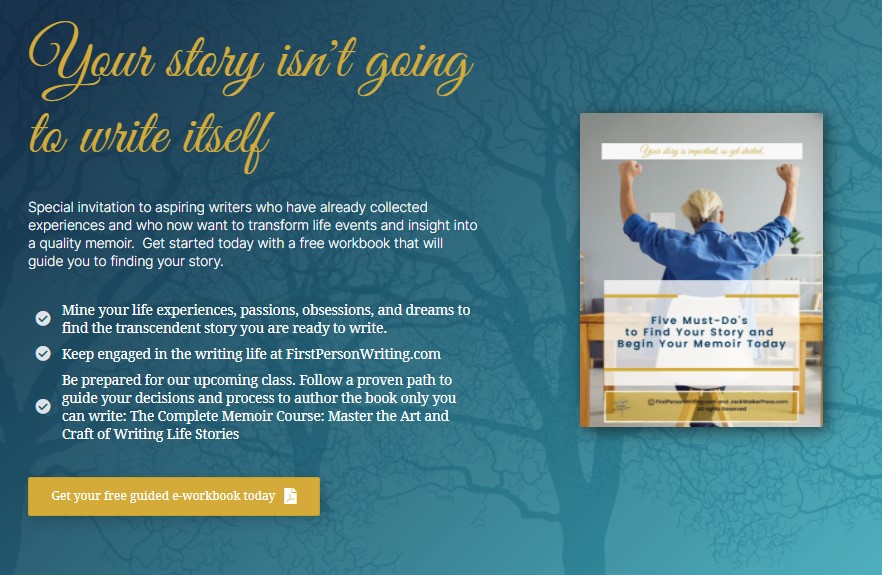
You can start privately by downloading 5 Must-Do’s to Find Your Story and Begin Your Memoir Today. It’s designed to help you identify what you already have, where your story lives, and how to begin without pressure or performance.
You can also download Every Natural Fact, my award-winning memoir, available free for a limited time.
You’re not late.
Your time is now.
1 thought on “Am I Too Old to Write a Book?”