Cumulative Sentences: OMG You Need these in your Writer Toolbox
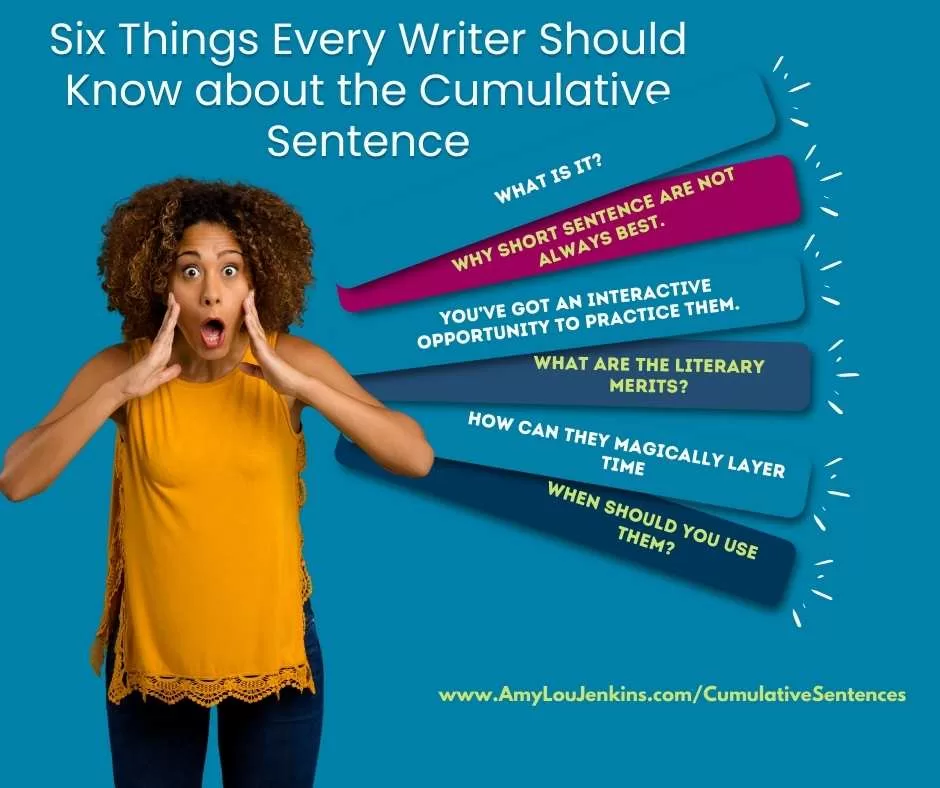
Short sentences have their place. They can punch, pause, and grab attention. But if every sentence is short, your writing risks feeling choppy and underdeveloped. Enter the cumulative sentence. This tool that can transform your prose from staccato to symphonic, carrying the reader deeper into meaning, mood, and imagery.
What Is a Cumulative Sentence?
A cumulative sentence (also called a loose sentence, but I'd never call it that: it's a precise type of sentence) starts with a main idea and then adds detail, description, or context through a series of phrases and clauses. It’s a way of layering thought, so the sentence grows in richness as it unfolds.
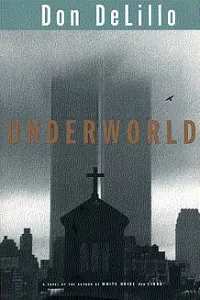
“His father struck him with the flat of his hand on the side of the head, hard but without heat, in a way that was strangely gentle, almost affectionate, and at the same time intended to make a point, and there was nothing more to be said about it.” — Don DeLillo, Underworld
The main point lands early, the father struck him, but the sentence keeps revealing emotional texture, tone, and character.
Why Short Sentences Aren’t Always Best
Short sentences are clean, but they’re often bare. They don’t always convey the complexity of thought or experience. Imagine trying to capture the layers of memory, the heat of an afternoon, or the swirl of conflicting emotions in a single five-word statement. Sometimes you need the space to breathe on the page.
William Faulkner was famous for taking that space:
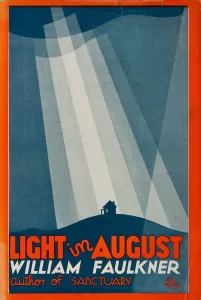
The Light in August by Falkner is also available as an Audiobook as well as other formats. This might be a good listen for those who find him a challenging read. This book is full of action. You might love it.
“He did not even know why he had done it except that it had seemed to him that there was nothing else to do and that now it was done he did not know how he could have done it nor how he could not have done it.” — William Faulkner, Light in August
Here, the winding structure mirrors the complexity of human thought — impossible to condense without losing its truth.
The Literary Merits of Cumulative Sentences
They add depth and precision – By building on the main idea, you can reveal subtle shades of meaning and sensory detail.
They create rhythm and momentum – The reader feels carried forward, much like listening to a piece of music develop its theme.
They immerse the reader in thought – The sentence becomes a mirror of perception, thought, or memory in real time.
How to Write Cumulative Sentences
Step 1: Begin with a clear independent clause. State the core idea first: “The street was quiet.”
Step 2: Add descriptive or clarifying phrases. Attach them with commas or conjunctions: “…lined with elms that whispered in the heat, their leaves curling at the edges, the shadows lying still as painted shapes.”
Step 3: Maintain logical flow. Each addition should expand or clarify the main idea, not drift into a new topic.
Step 4: Read aloud. Cumulative sentences have a musicality — reading them aloud helps ensure they flow naturally.
Cumulative Sentences and the Movement of Time
One of the most remarkable features of cumulative sentences is their ability to travel through time within a single breath of prose. Because the core statement lands first, the trailing phrases can carry the reader backward into the past. filling in history, motives, or memory, or forward into what’s about to unfold.
For example, a sentence might begin in the present moment — “She closed the door quietly” — then slide into the past: “…just as her grandmother had taught her when she was a child in the farmhouse with its creaking hinges and uneven latch.”
Or it might look ahead: “…unaware that in three hours, the news would arrive and nothing would be the same.”
This time-shifting capacity allows cumulative sentences to mirror the way human thought works — rarely linear, always layering cause, effect, and anticipation.
When to Use Cumulative Sentences
To slow the pace and draw the reader into a moment.
To match complex thought or emotion in your character’s perspective.
To vary sentence length so your prose has texture and avoids monotony.
To time travel as you layer the richness of past or future details.
Like any stylistic choice, they work best in balance. Too many, and the prose can feel heavy. Too few, and your writing might feel thin. None? Risk looking amateurish.
Your Challenge: Write Your Own Cumulative Sentence
Now it’s your turn. Write a single cumulative sentence inspired by a moment in your own life or fiction. Post your sentence directly in the Comments tab below this article — we’ll select one or two of the best to feature on our website and across three social media channels, complete with a mention of your book or website.
Deadline: October 5, 2025 Hashtag: #CumulativeSentences
Let your sentence breathe, expand, and carry the reader someplace unforgettable.