
Nature Writing: Why We Need It
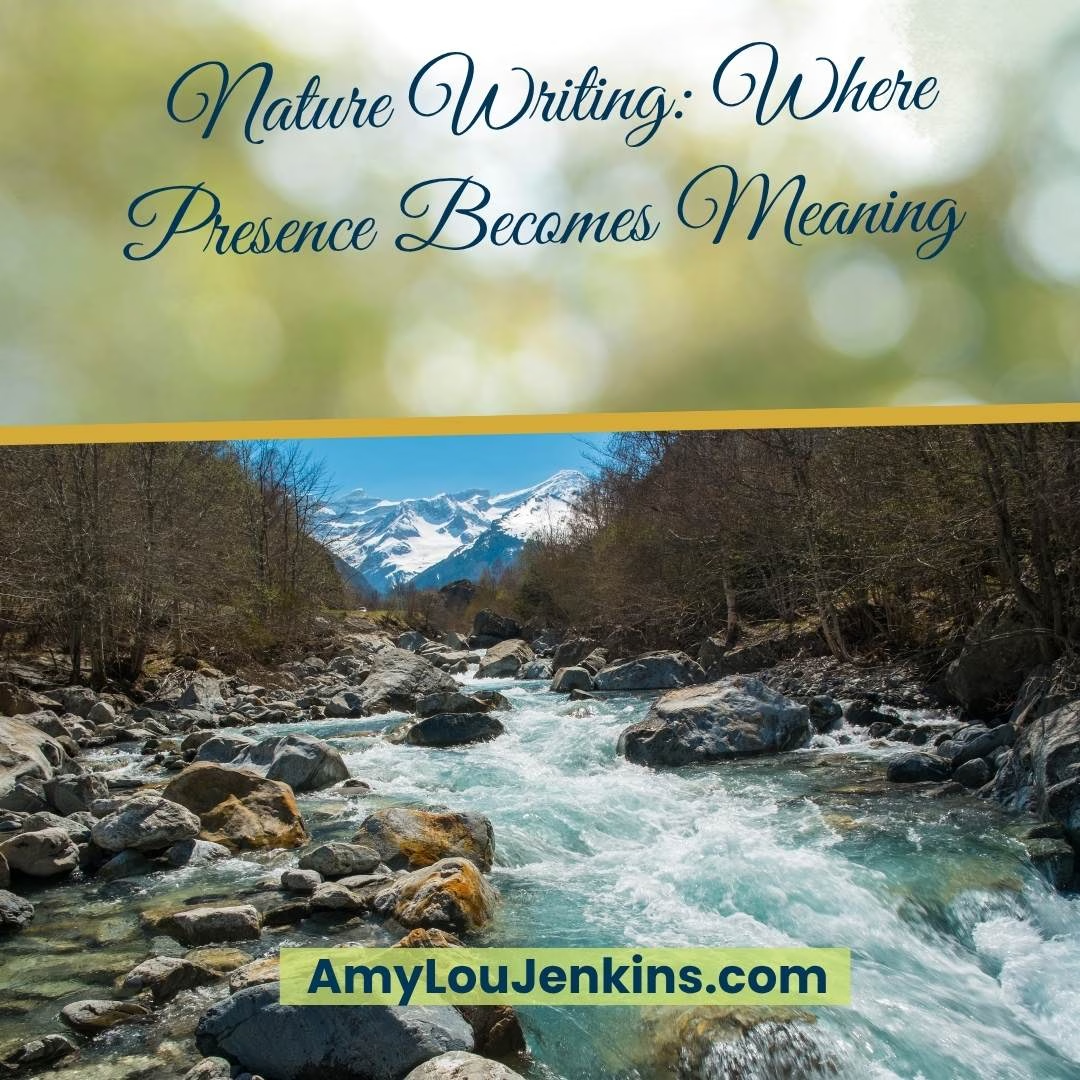
When I was writing Every Natural Fact, I spent hours beside a stream watching water froth over rocks. That riverine landscape wasn’t a place to describe. It wasn’t a moment of admiring the awe-inspiring beauty of nature: it wasn’t that at all. It was a lesson. The water was made of the same hydrogen and oxygen that have moved through every living being on Earth. The same molecules rushing past my feet had once risen inside ancient trees, circulated through the bloodstream of newborns, flown with migrating birds across oceans and continents, and inhabited creatures I will never know.
Standing there, I realized that water carries life through time. That moment, and others like it, shaped the book that shaped me. It clarified that nature writing isn’t about collecting outdoor details. It is a way to understand our place in the world and what it means to belong to the matrix of life, death, and renewal on this planet.
Where Observation Becomes Understanding in Nature Writing
People often assume nature writing is made of lists: birds, trees, and scenic details, all lined up with an Oxford comma. That assumption misses the point. The best nature writing does something far more challenging: it asks the writer to watch the world closely enough that observation becomes understanding.
Attention changes us. It slows the mind, sharpens perception, and gives meaning a place to land.
Robin Wall Kimmerer writes, “Paying attention is a form of reciprocity.” Her work reminds us that when we are present in the natural world, we build a relationship, not as tourists, not as collectors of fact, but as participants. Nature writing makes that relationship visible on the page. It translates presence into understanding.
The Search for Meaning in the Natural World
What draws readers to books rooted in nature isn’t a desire to memorize species or landscapes. It isn’t to hear about jaw-dropping wonder for its own sake. It is a search for meaning.
The natural world carries an honesty that modern life often obscures. Rivers do not pretend. Trees do not perform. The wild world is free of the salesmanship that saturates our days. And when readers open a book steeped in nature, they step into that same clarity.
That is why the genre endures even when trends change. Nature writing helps us navigate our internal lives by grounding us in something older, steadier, and more coherent than the noise around us.
It also gives us scale. A season is larger than a week of bad news. A watershed is older than anyone’s personal grief. The flight pattern of a migratory bird spans continents and centuries simultaneously.
When readers encounter these truths, their own struggles take a different shape. That shift can feel like relief, recognition, or spiritual connection. Sometimes all three.
Belonging as a Central Theme
Nature writing reaches toward belonging. Not the shallow belonging of curated identities or matching opinions, but the deep connection that comes from remembering we reside within a matrix of patterns and elements that connect us to everything else.
Wendell Berry once wrote, “The earth is what we all have in common.” In a fractured world, that is not a soft sentiment. It is a grounding principle. Nature writing holds that principle close. It shows that belonging is not an emotion. It is a structural fact.
J. Drew Lanham expands this understanding with clarity and resonance. In The Home Place, he writes about the tension and wonder of being a Black man rooted in the land he loves. He calls himself “a rare bird,” and in doing so, reveals a truth about identity that reaches beyond his personal story.
In nature, we see that we belong because we are nature. We are participants in the patterns that sustain the Earth. Nature writing helps the reader step into the freedom of that reality. One sentence, one moment, one life deserves its own emphasis: Belonging is elemental.
What Readers Seek on the Page
Readers turn to nature writing because it offers what modern life often strips away.
Clarity
Nature writing cuts through noise. It restores focus.
Connection
It reminds us that we are part of a living system, not separate from it.
Resonance
It gives language to the unnamed longing many people feel for authenticity and coherence.
Wisdom
Not inspirational fluff. Wisdom. Sometimes a small insight, an observation. Occasionally, a larger truth. Always the kind that endures. Wisdom outlasts distraction.
Returning to the Stream
This is the deeper work of nature writing. It is not a genre at the edges of literature. It is one of the oldest ways humans have tried to understand themselves. American culture drew from the writings of Emerson and Thoreau, who used the natural world to define individuality, citizenship, and the moral responsibilities of a young nation. Germany’s Romantic tradition used forests, rivers, and mountains to explore imagination, identity, and the human spirit. In Japan, centuries of poetry and philosophy rooted meaning in the intelligence of natural forms. Across cultures, people have turned to nature to understand who they are and how to live with that knowing.
The stream where I learned that water carries life through time still shapes how I think about writing, meaning, and attention. That stream taught me that I exist within a matrix of life and death and change and continuity. The long timelines remind me that most of my concerns are petty. The short cycles ground me in the precious value of my time here as me.
We turn to nature because it delivers truth. And we turn to nature writing because it translates that truth into meaning.