Ottla Kafka: A Story of Love and Sass Nearly Erased
Most of us will never face the kind of choice Ottla Kafka faced. But we are asked, again and again, to decide what happens to our values under pressure. We feel it when silence seems safer than speaking. When compliance looks practical, even responsible. When telling ourselves this is not our moment feels easier than risking discomfort or consequence.
The Ottla Kafka story reveals how silence and authoritarianism depend on ordinary people relinquishing their voice long before violence begins. Long before uniforms. Long before camps. For writers and readers especially, her life exposes how easily meaning can be surrendered. When stories are not told, when personal narratives are lost or erased, meaning collapses into abstraction, and power moves unchecked.
If we do not write what matters, meaning does not survive.
Who Ottla Kafka Was Before the Final Choice
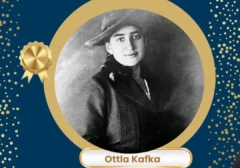
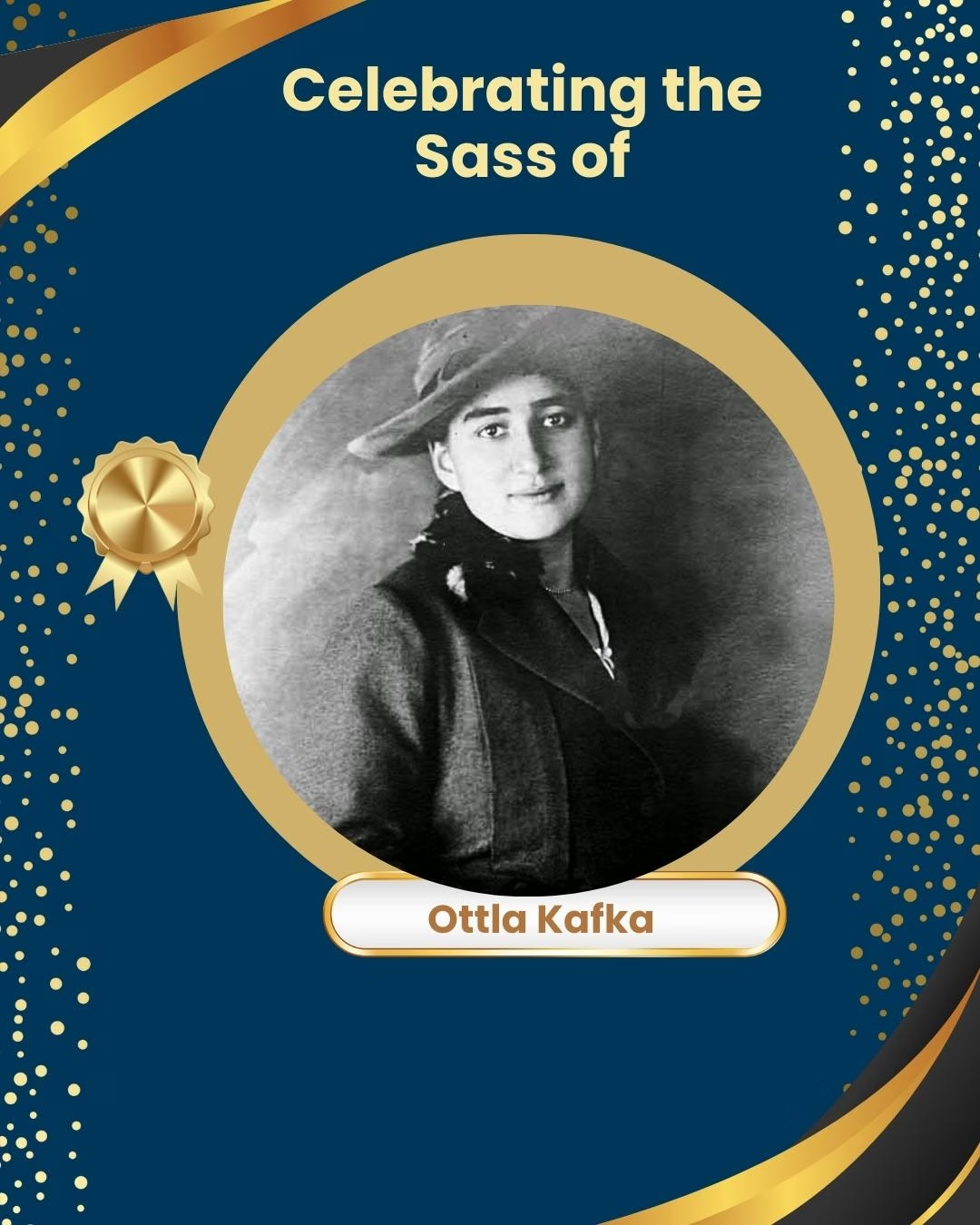
Ottla Kafka was born Ottilie Kafka in 1892 in Prague, the youngest sister of Franz Kafka. Within a family shaped by constraint and expectation, Ottla stood apart. She left home young. She pursued agricultural training. She built a life oriented toward work, care, and responsibility rather than approval.
She married, had two daughters, and lived with a practical independence that was unusual for a Jewish woman of her time. Those who knew her described her as grounded and morally serious. Franz Kafka trusted her deeply. His letters reflect admiration for her clarity and steadiness. Ottla’s own letters to him have never been found and are believed to be lost.
Ottla Kafka was one of three sisters. All were deported during the Holocaust, though Ottla’s final deportation was voluntary. None survived.
The Decision She Made Knowing the Cost
In 1943, Jewish children held in the Theresienstadt ghetto were placed on a transport bound for Auschwitz-Birkenau. The children were frightened and largely unattended.
Ottla Kafka volunteered to accompany them.
She understood what that choice meant. She knew she would almost certainly die. What she could not know was whether her decision would be remembered, or whether the meaning of her choice would survive beyond the moment itself.
She went anyway.
In her final letter to her daughters, written in October 1943, Ottla Kafka explained that she had volunteered to accompany the children on the transport to Auschwitz. That letter mattered. It carried intention where memory alone could not. It allowed her daughters to know not only what happened, but why.
Not to be seen.
Not to be saved.
But out of love, and a self imposed duty to comfort children facing terror alone.
Upon arrival, Ottla Kafka and the children were sent directly to the gas chambers. She was fifty-one years old.
What Silence Makes Possible
Atrocities do not begin with camps. They begin with language. With categories. With the steady erosion of individual lives into abstractions. Authoritarian systems depend on silence long before they depend on force. They rely on people believing their voice no longer matters.
Ottla Kafka’s story makes that progression visible. Her choice did not dismantle a regime. But it exposes the moment where power relies on our withdrawal. That moment still exists. It always does.
When silence becomes habitual, cruelty becomes efficient.
Why Writing and Reading Matter When Meaning Is at Risk
Ottla Kafka did not survive to tell her own story. Much of what we know about her comes from historical records and from letters written by her brother. Her voice reaches us only in fragments, shaped by what others preserved, including a final letter that carried her intention forward. That absence matters.
Meaning does not automatically survive trauma. It survives because someone writes. Someone preserves records. Someone refuses to let a life collapse into a statistic.
In ghettos and slums, in camps and exile, survivors hid notebooks, lists, letters, and testimonies. Writing did not stop violence. But it prevented total erasure. It insisted that lives were more than numbers and that suffering could still be named, shaped, and understood.
Reading is not passive consumption. It is an active encounter. Reading shows us how quickly unexamined ideas turn into habits, and habits into systems that are difficult to dismantle. Reading allows other lives to challenge our thinking, sharpen our values, and expand our moral imagination. It gives us language for what we sense but cannot yet articulate.
Writing and reading together form a discipline of engagement. They keep meaning alive by forcing us to engage, interpret, and respond rather than look away. They make humanity legible again when systems work to reduce it.
Why Ottla Kafka Is a Sass Star
Ottla Kafka is a Sass Star because she lived and acted from chosen values without witnesses, without safety, and without the promise of being remembered. Her sass was not rhetorical. It was enacted. Her voice was expressed through action when speech no longer mattered.
And now, it is up to others to carry that meaning forward, deliberately.
An Invitation to Writers and Readers
What stories from your life hold meaning that should not disappear?
What have you lived that deserves to be shaped into language?
Where might your voice interrupt silence before it hardens into something worse?
Writing is not indulgence. It is responsibility. Meaning lives only as long as someone is willing to give it form.
Notes for Further Research
Those who wish to learn more about Ottla Kafka and the preservation of her story may explore:
-
Archival materials held by the Jewish Museum in Prague
-
Records and testimony preserved by the Theresienstadt Memorial
-
Published collections of Franz Kafka’s letters referencing Ottla Kafka
-
Holocaust transport documentation from Terezín to Auschwitz
-
Scholarly work in Kafka studies and Holocaust history addressing the erasure of women’s voices
Write With Us
If this story stirred something in you, you are not alone. At WriterClubhouse Studio Sessions, we gather to write toward clarity, responsibility, and chosen values. These sessions are for writers who understand that words are not neutral tools, but forces that shape how we live together.
You do not need a finished project.
You need attention.
And the willingness to look closely.
Words shape worlds.
What are you willing to say out loud?