
What Makes a Great Memoir:
Craft Lessons from the Books Readers Can’t Stop Recommending
What makes a great memoir?
Not fame.
Not shock value.
And not even an extraordinary life.
The memoirs readers press into a friend’s hands, the ones they talk about years later, tend to do something more exacting and more difficult. They rely on precision, intensity, and a deliberately shaped story that creates meaning rather than simply reporting experience. They offer language for experiences readers recognize but have not fully articulated.
They also trust the reader enough to have their own response and emotional journey alongside the story. That trust is not passive. It is an intentional, crafted choice. And it is how these books achieve resonance.
Writers are often told that this kind of response cannot be predicted or reproduced. That it belongs only to rare books written under rare circumstances. But when you look closely at widely loved, non-celebrity memoirs, patterns begin to emerge. Not formulas, but craft decisions. Choices about voice, structure, restraint, and authenticity that consistently engage readers.
So let’s look closely at several bestselling memoirs and ask a practical question. What makes a great memoir, and what are these books actually doing on the page that makes readers want to talk about them?
What Great Memoirs Tend to Share
When readers recommend a memoir, they are rarely summarizing the plot. They are describing how the book felt to read. How it lingered. How it unsettled them. How it clarified something they had not yet named.
Across widely loved memoirs, several shared qualities appear again and again.
1. A Voice the Reader Trusts
Great memoirs do not aim to be likable. They aim to be credible.
The narrator does not rush to justify themselves or manage the reader’s response. Contradictions remain visible. Uncertainty remains visible. Limits of understanding remain visible.
This steadiness is not caution. It is confidence.
Once a reader trusts the voice, they stop evaluating the author and start inhabiting the book.
2. A Genuine Interior Question
Compelling memoirs are not driven only by events. They are shaped by inquiry.
Something real is at stake for the narrator.
Who was I allowed to be?
What did I believe that no longer holds?
What does belonging cost?
Who am I becoming?
The question may never be stated outright. Still, readers can feel it guiding the narrative. They keep reading not for answers, but to witness the thinking unfold.
3. Radical Specificity
Readers connect to memoirs because of themes. Themes are what make a life story universal. But readers inhabit memoirs through scenes, through a compelling narrator, and through the felt experience of emotion on the page.
Radical specificity means rendering both events and emotions concretely. It means naming feeling without abstract explanation, so the reader can feel it too. Instead of telling us that grief was overwhelming, the writer shows us the physical weight of it. The foggy heaviness in the head after crying. The exhaustion that settles into the body. The way a memory arrives and refuses to let go.
This kind of specificity does not avoid emotion. It sharpens it. When emotion is rendered viscerally rather than explained, readers recognize it immediately. They do not need to be told what it means. They already know.
4. Emotional Restraint
Restraint does not mean emotional distance. It means the writer does not do the reader’s emotional work for them.
The memoirs readers most often recommend avoid sermonizing. They resist tidy moral conclusions. They allow ambiguity to remain unresolved.
This restraint is not softness. It is rigor.
5. Language That Earns Its Weight
Memorable memoirs contain sentences readers underline, quote, or repeat to friends. Not because they are ornate, but because they are precise.
The language feels inevitable once read.
Clear.
Attentive.
Unforced.
6. Space for the Reader’
When a memoir answers every question, there is nothing left to say.
The books readers talk about leave room for disagreement, recognition, and reflection. That space is what turns reading into conversation. Memoirs are a before and after story, yet the after story in a neat and tidy bow feels false to many readers.
Five Memoirs Readers Love and What Writers Can Learn from Each
Let's look closely at how specific books put these elements into practice. Find great the best-selling memoirs below the video.
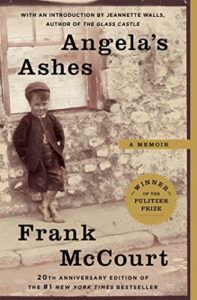
Angela’s Ashes by Frank McCourt
What readers love: Emotional understatement paired with radical specificity
Frank McCourt recounts an arduous and often horrific childhood, but what makes the book unforgettable is how he tells it. He describes scenes with exacting detail and allows his emotional response to remain brief, honest, and proportionate to the moment.
He never tells the reader a scene is pitiful. He simply shows it.
As a result, readers often respond more emotionally than the narrator does on the page. Their experience runs alongside his rather than being directed by him.
There is also a practical craft factor here. McCourt was a teacher. He had told many of these stories aloud in classrooms for years before writing the book. He knew which details landed, which did not, and where listeners leaned in. The storytelling was deeply honed before it ever reached the page. A process similar to how Ralph Waldo Emerson refined ideas through repeated public speaking.
McCourt also recorded the audiobook himself, his Irish lilt reinforcing the book’s authenticity and voice.
What writers can learn:
Specificity and restraint invite the reader into a fuller emotional experience. When writers trust scenes and keep their own responses true but brief, readers do the deeper feeling.

The Glass Castle by Jeannette Walls
What readers love: Radical honesty without self-judgment
Like Angela’s Ashes, The Glass Castle relies on specificity and restraint. But its emotional engine is different. There is little humor here.
Instead, readers are drawn into the tension of trying to love, or sometimes avoid loving, deeply flawed parents.
Walls renders her inner life as clearly as her scenes, yet she avoids overexplanation. She allows herself to hold contradictory truths. Love. Anger. Loyalty. Distance. She neither vilifies her parents nor conforms to how she is supposed to feel.
Importantly, she resists gendered expectations of emotional performance. She does not soften her thinking to please the reader or punish herself to appear virtuous.
What writers can learn:
Readers stay engaged when writers are willing to think boldly and honestly on the page, even when the conclusions are uncomfortable.

Wild by Cheryl Strayed
What readers love: A physical journey that carries a moral and emotional inquiry
On the surface, Wild is about hiking the Pacific Crest Trail. What readers are actually following is a mind reckoning with grief, self-destruction, and repair.
As Strayed walks, she dramatizes the physical demands of the trail while braiding in memory. Her mother. Her brother. The losses that fractured her sense of self. Beneath it all runs a central question. Can she become a person her mother would be proud of?
Action comes first. Reflection is braided into it. The hike is not layered onto the story. It is the story’s structure.
What writers can learn:
A memoir can be bold without spectacle. Precision, persistence, and a clear through line are enough.

Eat, Pray, Love by Elizabeth Gilbert
What readers love: Multiple emotional entry points and visible transformation
One reason Eat, Pray, Love resonated so widely is that it engages multiple thematic threads at once. Food. Travel. Romance. Spirituality. Personal relationships. Each offers readers a different emotional point of entry.
Gilbert also structures the book as a clear before and after story. Not perfection. Not happily ever after. But movement.
In each section, she begins in one state of understanding and ends in another. She shows her flaws, her agency, and her willingness to change. Readers are not watching someone arrive fully formed. They are watching someone move.
What writers can learn:
Change, clearly rendered, is one of the boldest moves a memoir can make.
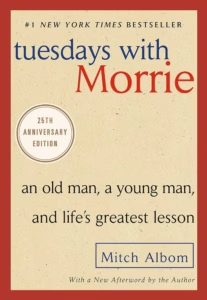
A Brief Word on Tuesdays with Morrie by Mitch Albom
This was not my favorite memoir. For me, the pastoral tone leaves little room for the reader’s independent thinking, and the answers to life’s big questions arrive quickly and cleanly.
And yet it resonated with millions.
Why?
A simple, accessible structure.
A clear emotional promise.
Wisdom delivered without friction.
The lesson matters. Every memoir chooses its reader. A book does not need to appeal to everyone to be deeply meaningful. It needs to know who it is speaking to. And it can be good for some readers and not resonate for me. (And I'll admit to some writer's envy "He made big bucks with THIS book?!)
What You Can Learn from Successful Memoirs and What You Cannot Copy
It is tempting to search successful memoirs for a blueprint. But what travels from book to book is not content. It is craft, practice, and authenticity working together.
You cannot copy another writer’s life, voice, history, values, or sensibility.
But you can practice rendering scenes with precision. Trusting readers with complexity. Shaping a narrative around real inquiry. Revising away from language that tries to sound writerly rather than true.
No one walks down the street talking about their muse.
When writers adopt language they think sounds literary instead of language that sounds like themselves, authenticity erodes.
The memoirs readers recommend succeed because the writers made careful and often difficult choices in service of telling the truth as they understood it.
That intersection between artistry and authenticity is where resonance happens.

An Invitation to Practice
These elements do not appear by accident. They are developed through sustained attention, revision, and conversation.
In Writer Clubhouse studio sessions, this is the work we return to again and again. Voice. Structure. Specificity. Restraint. Resonance. Practiced on real pages, not discussed in the abstract.
If you are interested in deepening how your memoir meets its reader, you are welcome to join us.

Why Write Memoir?
Best-Selling Authors Tell You Why You Should Write Memoir Writing a memoir is a powerful and transformative experience. I know that I’ve left a window into my life because … Read more
Memoir Opening: How to Hook Your Reader
Memoir Opening: How to Hook Your Reader from the First Page Memoir Opening: Exploring the Best Ways to Begin Your Memoir Memoirs artfully share your experiences and story with … Read more

Nine tips for Finding Your Memoir’s Theme
Nine Tips for Finding Your Memoir’s Theme Also of Interest: Find the Theme of Your Memoir (with 50 Examples.) 1. Read through journals, notes, letters, and emails. Review photos. … Read more

Find the Theme of Your Memoir (with 50 Examples)
Find the Theme of Your Memoir (with 50 Examples) If you’ve decided to write a memoir, one of the most important decisions you’ll have to make is the theme of … Read more

Welcome to My New Website
Welcome to My New Website Let’s celebrate narrative nonfiction and the natural world. You’ve arrived at AmyLouJenkins.com, my new author site. While you will find author pages here, there’s … Read more
- « Previous
- 1
- 2